
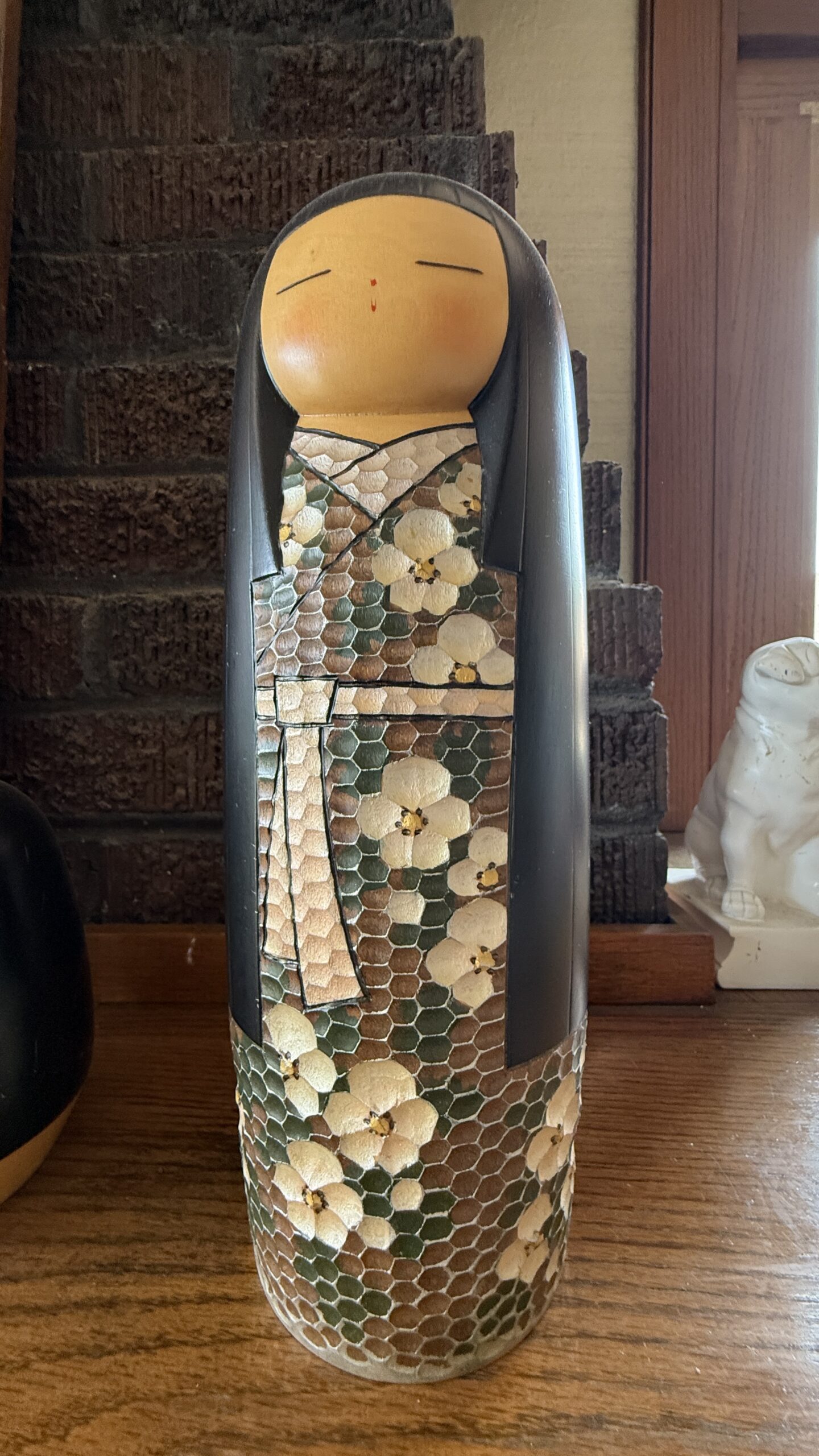
 here's a thread running through everything I've gathered for ReBloom, and it took me longer than it should have to notice it: wood.
Not wood as material. Wood as presence.
Look closely at the objects that have found their way to me over the years — the kokeshi, the alebrijes, the masks — and a pattern emerges that has nothing to do with geography or style and everything to do with how different traditions, oceans apart, arrived at the same understanding: a tree doesn't stop being alive just because it's been shaped into something else.
Kokeshi are turned from a single piece of mountain wood by Japanese craftspeople, each figure still carrying the grain — and, I like to think, the memory — of the tree it came from. No two are identical, because no two trees grew the same way.
Alebrijes are carved from copal, a tree the Zapotec people consider sacred. The dreamlike creatures that emerge from copal wood aren't so much invented as released — as if the shape were already inside the wood, waiting for someone patient enough to find it.
Masks, almost everywhere in the world, come from trees too — Balinese hardwood, African hardwoods carved from a single block, single trunks carved whole by hand. In Bali, ceremonial masks are traditionally cut from a tree without felling it — the tree gives something of itself and keeps living. Once the mask is finished, it isn't just a finished object. It's ceremonially presented, welcomed into use the way you'd welcome a person.
Baskets carry the same story in an entirely different technique. Ho-Chunk basket makers here in the Great Lakes region pound and pull brown ash logs by hand until the wood separates into long, pliable splints — a process that takes real strength and an inherited feel for the grain before a single strand is ever woven. Further south, Ohio's splint basket tradition does the same thing with hard maple, split by hand and woven by generations of makers, many of them women, who learned the craft at home and signed their work with pride. Willow basketry, older still and found nearly everywhere people have needed to carry things, works a little differently — whole green rods woven wet rather than split — but it comes from the same instinct: read what the tree gives you, and let the material tell you what it wants to become.
Different continents, different techniques, one instinct: the forest doesn't end when the tree is cut. It travels forward — into the object, into a home, into a place like this one.
Almost everything I gather is like this in one way or another — natural material, worked by hand, carrying the maker's understanding of what it started as. Clay remembers the riverbank. Wool remembers the sheep. But wood is the one that's followed me home the most, so it's the one I want to tell you about first.
I didn't set out to collect around a theme. But looking back at four decades of pieces gathered one at a time, at auctions and estate sales and shops in places I didn't expect to find anything, the theme was there before I was looking for it.
Maybe that's not surprising. My name is Wedekind — child of the forest. I didn't choose my collection to match my name. But somewhere along the way, it seems my name was quietly doing the choosing anyway.
That's the spirit I'm building ReBloom around: caring for old and living things is a radical act. Every mask, every alebrije, every kokeshi that comes through these doors is looking for its right next keeper — someone who'll understand that what they're holding isn't just wood. It's a forest that decided to keep going.
ReLove · ReClaim · ReHome